Achieving optimal lighting conditions for your crops at every growth stage is crucial, whether you're cultivating in a controlled environment or a greenhouse. While controlling lighting is easier in sole-source environments, greenhouse growers face the challenge of supplementing natural light while considering external factors that can impede light levels. Dr. Roberto Lopez of Michigan State University highlighted the impact of glazing materials and structural elements, which can reduce light levels by up to 70%.
The Daily Light Integral (DLI) plays a vital role in greenhouse growing. Dr. Lopez emphasized that a minimum DLI of 15 moles of light is necessary to produce high-quality vegetables and herbs. DLI represents the sum of Photosynthetically Active Radiation (PAR) that plants receive in a 24-hour period. In a controlled greenhouse, supplementing the DLI can significantly enhance crop quality and production rates. For instance, lettuce's time to harvest can vary based on DLI levels:
17 mol·m-2·d-1: 35 days to harvest
10 mol·m-2·d-1: 60 days to harvest
5 mol·m-2·d-1: 119 days to harvest
To optimize lettuce growth, it is generally recommended to supplement the light in your greenhouse to achieve a minimum DLI of 12 to 13 moles over a photoperiod of 10 to 16 hours. However, exceeding 17 moles for an extended period may lead to issues like tip-burn.
Increasing the DLI has several positive effects on plant growth, including higher yields, more branches, increased stem diameters, smaller and thicker leaves, sturdier plants, and improved root growth. It's important to provide supplemental lighting only when plants can effectively utilize it. A well-designed LED lighting control strategy adjusts to the plants' needs, delivering optimal light throughout the day, regardless of the season.
The color spectrum of light also plays a crucial role in greenhouse growth. Different wavelengths of light contribute to various growth phases. Blue light promotes compact vegetative growth, influences color and finish, and enhances root development. Green light penetrates deeper into the canopy, supports natural growth, and prevents abnormal development. Red light stimulates photosynthesis, leading to healthy plant development and biomass accumulation. Far-red light is associated with extension and expansion growth, flowering, and biomass development. Manipulating these light wavelengths allows precise control over plant growth, from rooting to finishing.
Comparing LED and HPS lighting in a greenhouse, LEDs offer significant advantages. HPS lighting has a fixed spectrum and is not optimized for PAR and plant cultivation. In contrast, LED lighting provides the right light at the right place and time, tailored to achieve specific crop goals. LEDs are more energy-efficient, controllable, and offer optimized spectra for plant growth. With intelligent LED systems, you can reduce power demand while maintaining yields or increase yields with the same power input. Customized LED lighting strategies empower growers to manage crop growth in ways that were once challenging with HPS lighting. Whether you aim for year-round harvests, extended shelf life, vibrant colors, or enhanced flavors, versatile LED lighting with intelligent control systems creates the perfect lighting environment.
By implementing advanced lighting strategies, greenhouse growers can harness the power of light control to unlock the full potential of their crops. Experience the transformative impact of tailored lighting solutions and elevate your greenhouse cultivation to new heights.
 EU PPWR Packaging Regulation Takes Effect Aug 12 | How Hortibest LED Grow Lights Fully Comply
 HPS to Tunable LED Grow Lights: Why Your Old Irrigation Schedule Will Cost You Yields
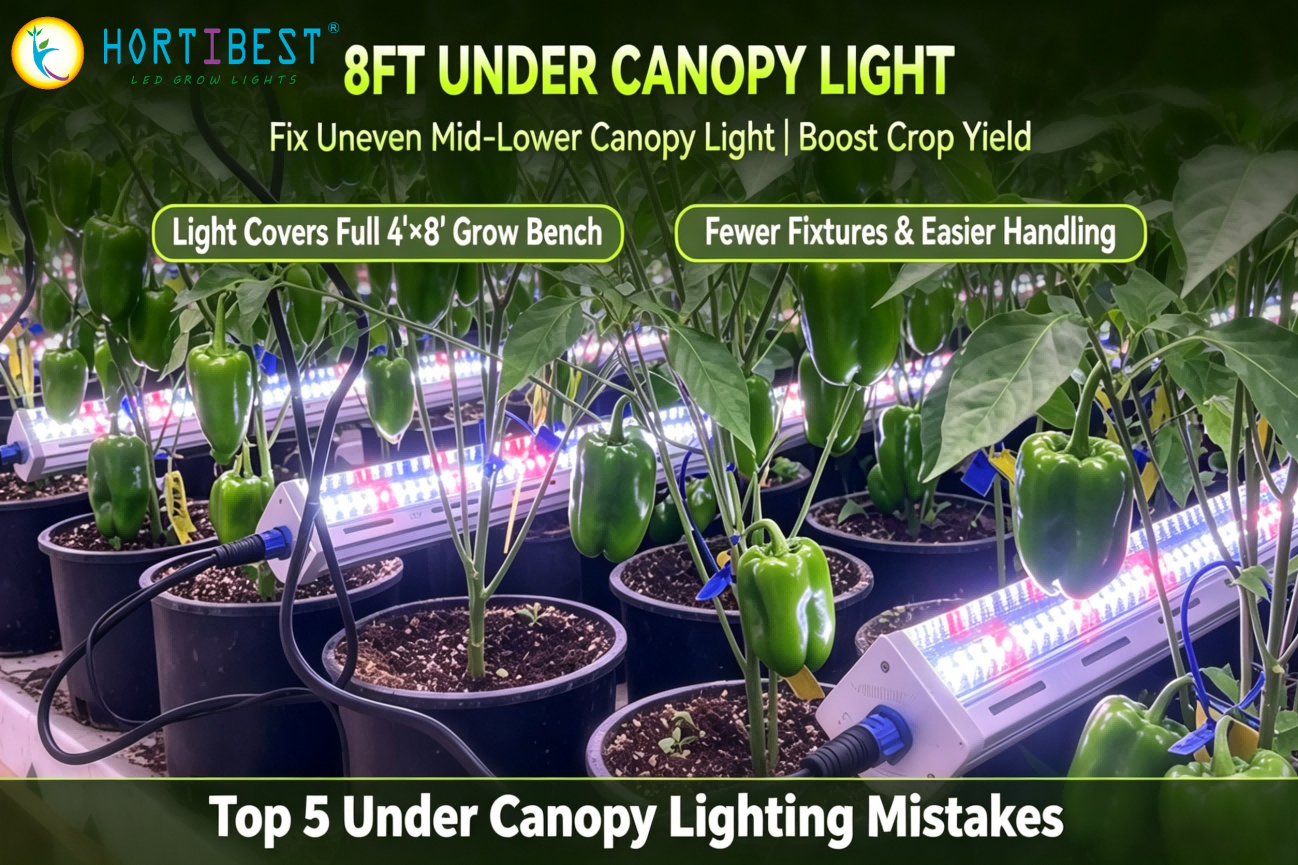 Top 5 Under Canopy Lighting Mistakes Commercial Growers Make | UCL Best Practices
 40% Higher Winter Strawberry Revenue: Minnesota Commercial Greenhouse Fixes High HVAC Costs & Pale Berries with Shark‑2600 Linear LED Grow Lights


