Tomatoes are a crucially important crop that is widely cultivated and consumed. To improve yield and quality, growers are constantly exploring innovative techniques and methods. In the past, green light was considered to have minimal impact on plant growth, with red and blue light believed to be the key spectra. However, recent research indicates that green light has a positive influence on tomato growth and yield, particularly for varieties with multi-layer canopy structures and long lifecycles. This article delves into the role of green light in tomato cultivation, offering valuable tips and practical insights.
1.Photosynthetic Efficiency of Green Light:
Although green light is less absorbed by plant leaves compared to red light, it still plays a significant role in the process of photosynthesis. Studies have shown that an appropriate amount of green light can enhance the photosynthetic efficiency of tomato plants, facilitating nutrient uptake and conversion. This has a notable impact on tomato growth and yield.
2.Optimizing Intra-Canopy Lighting:
Due to their multi-layer canopy structures, tomato plants tend to receive better red and blue light absorption in their top leaves, while middle and lower leaves receive relatively less. However, adding an adequate amount of green light can increase light penetration and distribution within the canopy, enabling middle-layer leaves to receive more light. This improves overall photosynthetic efficiency and yield of the plant.
3.Achieving Spectral Balance:
The addition of green light also aids in achieving a balanced spectrum. Red and blue light are essential spectra for tomato growth, and green light provides spectrum balance and integrity. This contributes to the overall health and development of the plants, promoting flower bud differentiation and fruit development.
4.Best Practices:
To harness the benefits of green light effectively, here are some best practices:
Use professional LED grow lights: Select LED grow lights specifically designed to provide precise spectrum control, including an appropriate amount of green light.
Adjust lighting parameters: Adapt the lighting parameters of the LED lights according to the tomato variety and growth stage, including the percentage of green light and total light intensity.
Optimize planting layout: Arrange tomato plants in a manner that ensures sufficient light exposure for middle and lower leaves, maximizing the effects of green light.
Green light has been proven to have a positive impact on tomato growth and yield. By understanding the mechanisms behind the role of green light and implementing corresponding cultivation practices, growers can optimize the growth environment of tomatoes, enhancing both yield and quality. LED grow lights are an ideal choice for providing green light supplementation. Let us fully harness the power of green light, bringing greater success and rewards to tomato cultivation.
source:
Weerheim et all, 2019 https://doi.org/10.1016/j.scienta.2019.02.005
 EU PPWR Packaging Regulation Takes Effect Aug 12 | How Hortibest LED Grow Lights Fully Comply
 HPS to Tunable LED Grow Lights: Why Your Old Irrigation Schedule Will Cost You Yields
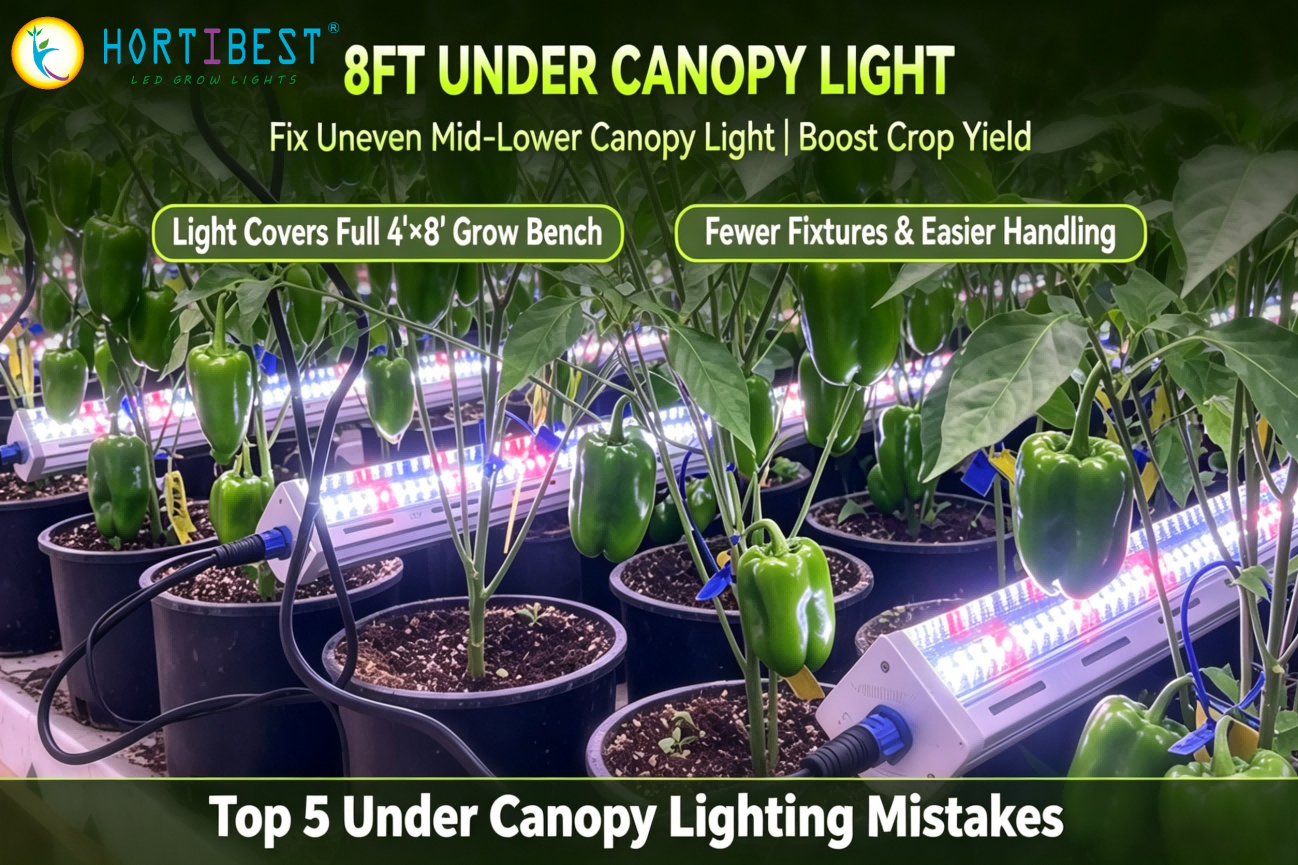 Top 5 Under Canopy Lighting Mistakes Commercial Growers Make | UCL Best Practices
 40% Higher Winter Strawberry Revenue: Minnesota Commercial Greenhouse Fixes High HVAC Costs & Pale Berries with Shark‑2600 Linear LED Grow Lights


