Two key factors play an important role in plant growth: spectrum and intensity. These factors are the foundation for providing plants with the light they need to thrive. Down the road, we'll take a deeper look at what spectrum and intensity mean and why they're integral components in the world of plant grow lighting.
In the case of plant grow lights, spectrum refers to the range of wavelengths emitted by the light source. Different spectra have different effects on plant growth and development, and specific wavelengths play important roles at different stages of a plant's life cycle. For example, blue light is essential for promoting plant growth, while red light is necessary to stimulate flowering and fruiting. By understanding the specific spectral needs of plants, growers can tailor their lighting solutions to optimise plant growth and yield.
Intensity, on the other hand, relates to the brightness or concentration of light emitted by a light source. Light intensity directly affects the rate of photosynthesis and overall plant growth. Insufficient light intensity can lead to stunted growth and poor crop yields, while too much light intensity can cause stress and damage to plants. Finding the right balance of light intensity is therefore essential to ensure optimal growing conditions for your plants.
The interaction between spectrum and intensity is critical when selecting plant grow lights. A well-designed lighting system should provide the right spectrum for the type of plant being grown and the right level of intensity to support healthy plant growth. In recent years, LED grow lights have become popular for their ability to provide customisable spectrum and intensity options, allowing growers to fine-tune their lighting setup to the specific requirements of their plants.
In conclusion, spectrum and intensity are important factors to consider when investing in plant grow lights. By understanding the role that spectrum and intensity play in plant growth and development, growers can make informed decisions when choosing lighting solutions for their crops. With the right combination of spectrum and intensity, plants can get the light they need to thrive in artificial growing conditions.
By using the optimum spectrum and intensity in their lighting installations, growers can harness the power of light to maximise plant growth and yield, and ultimately reap the rewards of a bountiful harvest.
 EU PPWR Packaging Regulation Takes Effect Aug 12 | How Hortibest LED Grow Lights Fully Comply
 HPS to Tunable LED Grow Lights: Why Your Old Irrigation Schedule Will Cost You Yields
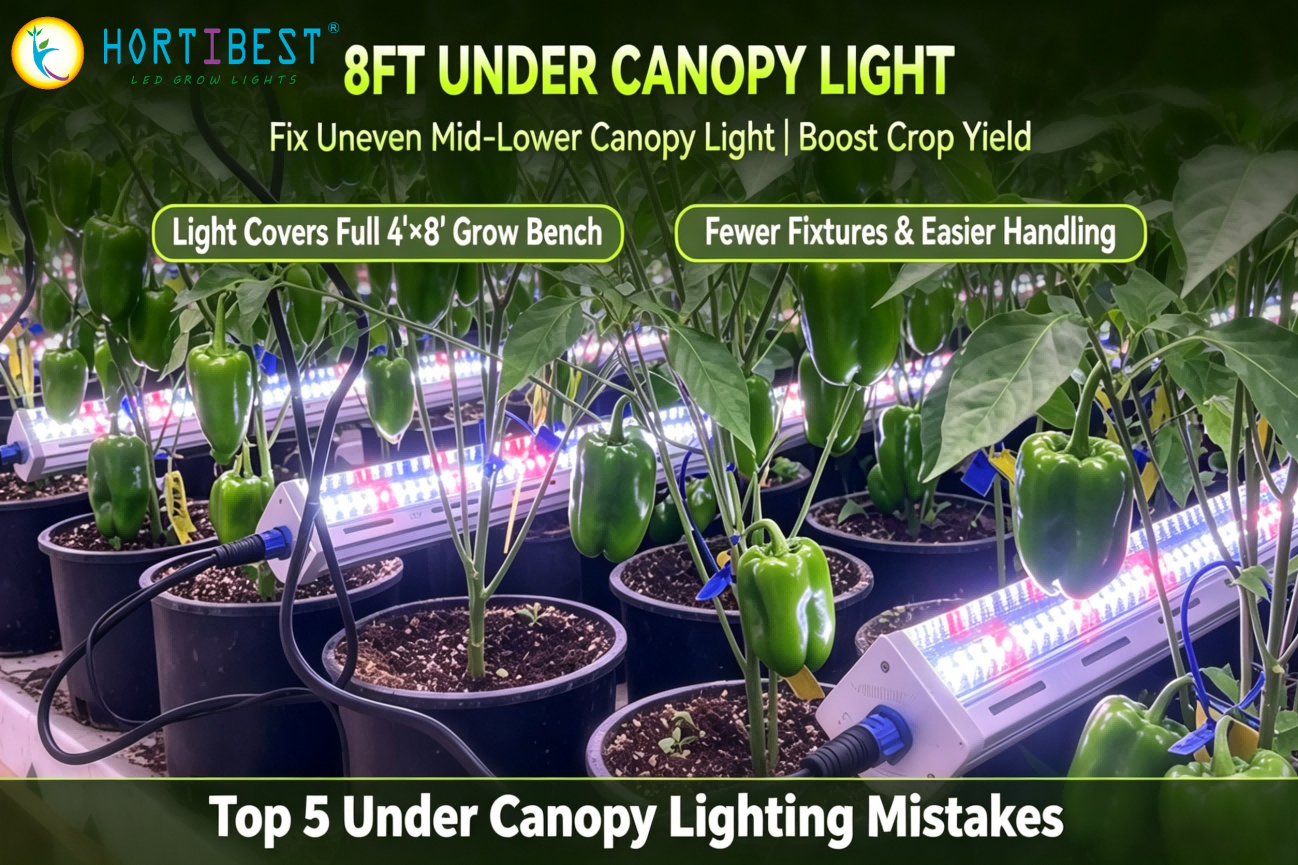 Top 5 Under Canopy Lighting Mistakes Commercial Growers Make | UCL Best Practices
 40% Higher Winter Strawberry Revenue: Minnesota Commercial Greenhouse Fixes High HVAC Costs & Pale Berries with Shark‑2600 Linear LED Grow Lights


