Hortibest LED Jellyfish plant growth light is an efficient, energy-saving, and high-quality lighting solution primarily used for indoor cultivation and commercial agriculture. With its evenly distributed PPFD and coverage of a 5ft*5ft growing area, it provides a perfect 1:1 replacement for traditional high-pressure sodium (HPS) lights. Compared to HPS lights, the Jellyfish plant growth light offers several advantages in the plant cultivation process:
1.Enhanced spectrum quality: The Jellyfish light provides optimized spectra and PPFD levels for each stage of plant growth, covering nearly all spectral ranges required for plant development. With a large emitting surface and uniform light distribution, it reduces growth disparities between plants, thereby improving overall yield and quality. In contrast, HPS lights can only provide a simple and generic spectrum without targeted PPFD. This wide-range and adjustable spectrum makes the Jellyfish light an ideal choice for commercial cultivation, scientific research, and educational purposes.
2.Safer usage conditions: HPS lights contain hazardous substances like mercury, which can have environmental and health impacts. HPS lights operate at high voltage, posing electric shock risks, and have poor resistance to vibrations. In contrast, the Jellyfish light is free from harmful substances, such as mercury, making it environmentally friendly. Its low-voltage driving system eliminates the risk of electric shock and ensures better resistance to vibrations, resulting in safer usage.
3.Longer lifespan: HPS lights typically have a lifespan of 5,000-10,000 hours, whereas the Jellyfish light has a lifespan of 35,000-50,000 hours. This implies less frequent replacement of the Jellyfish light, reducing operational costs.
4.Lower heat generation: HPS lights operate at higher temperatures (lamp tube temperatures exceeding 600°C), generating significant heat that can impact the surrounding environment. The Jellyfish light operates at temperatures below 85°C, resulting in lower heat generation, energy consumption, and greater energy efficiency.
5.Wider range of applications: Due to the aforementioned advantages, the Jellyfish light finds extensive applications in greenhouse cultivation, indoor farming, vertical farming, flower production, and other fields. While HPS lights may have certain advantages, the Jellyfish light can completely replace them in terms of performance.
 EU PPWR Packaging Regulation Takes Effect Aug 12 | How Hortibest LED Grow Lights Fully Comply
 HPS to Tunable LED Grow Lights: Why Your Old Irrigation Schedule Will Cost You Yields
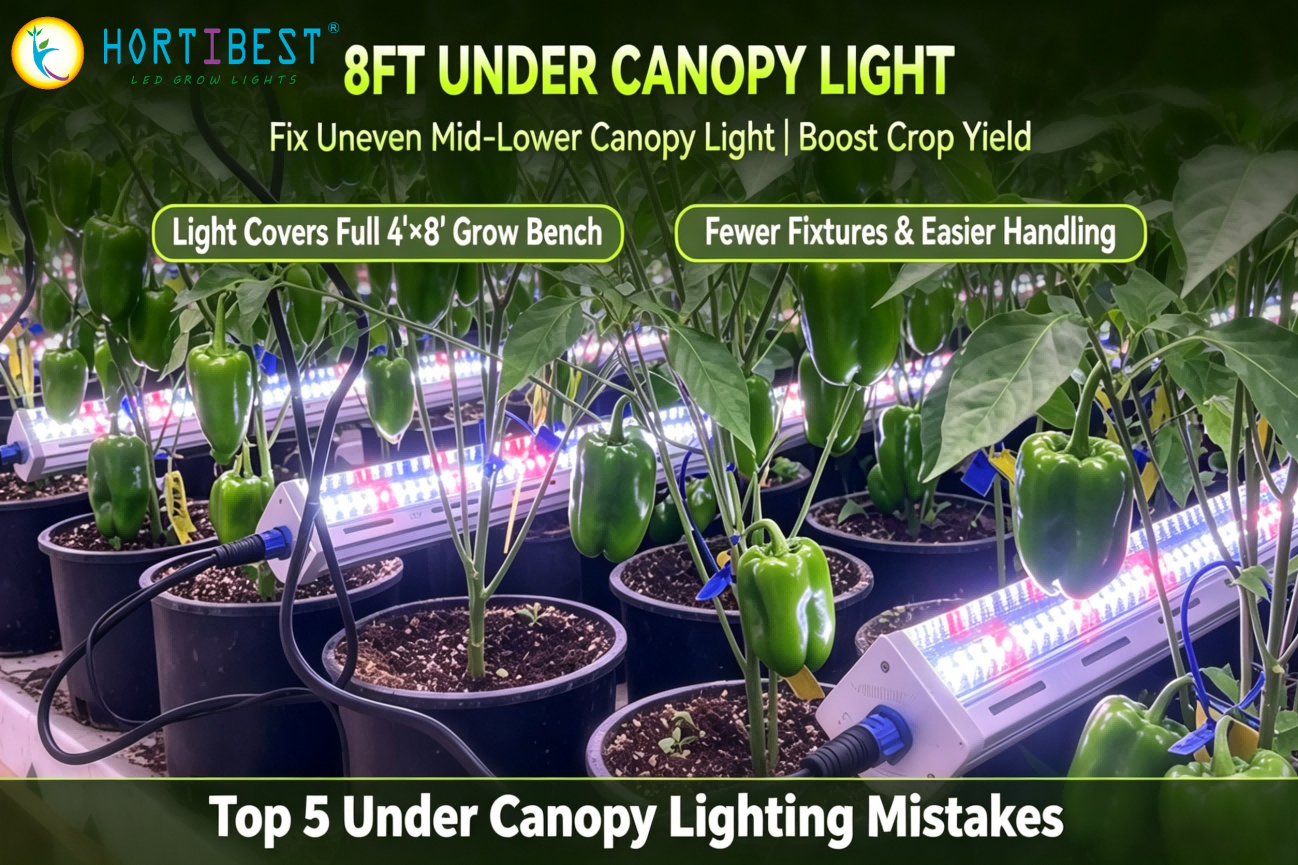 Top 5 Under Canopy Lighting Mistakes Commercial Growers Make | UCL Best Practices
 40% Higher Winter Strawberry Revenue: Minnesota Commercial Greenhouse Fixes High HVAC Costs & Pale Berries with Shark‑2600 Linear LED Grow Lights


