
Overwatering is the mistake new gardeners make. Not anymore. Follow this easy seedling watering schedule for happy, healthy plants that grow fast.
How to Water Your Seedlings: The First 30 Days & Beyond
Below is my 30-day watering schedule for seedlings growing in 3‑gallon or 5‑gallon fabric pots.
Day 1 – Give 2 cups (500ml) water per plant. (At this point, your seedlings should have their leaves fully open and be in a 3‑ or 5‑gallon fabric pot under a grow light.)
Day 3 – Give 2 cups (500ml) water per plant.
Day 6 – Give 2 cups (500ml) water per plant.
Day 8 – Give 3 cups (750ml) water per plant. (From here on, water every 3 days.)
Day 11 – Give 3 cups (750ml) water per plant.
Day 14 – Give 4 cups (1 liter) water per plant.
Day 17 – Give 4 cups (1 liter) water per plant.
Day 20 – Give 5 cups (1.25 liters) water per plant.
Day 23 – Give 6 cups (1.5 liters) water per plant.
Day 26 – Give 6 cups (1.5 liters) water per plant.
Day 29 – Give 8 cups (½ gallon / 2 liters) water per plant.
After the first month – watering like a pro:
Wait until the top inch of soil is dry. (For coco coir, wait until the top feels mostly dry.)
Water until you see 10–20% runoff from the bottom.
Remove the runoff (test pH if needed) and let the pot drain.
Note: This schedule works for me, but your environment changes things. If you use hard‑sided plastic pots instead of fabric, you’ll likely need less water or less frequent watering. Plastic holds moisture in; fabric pots breathe, so they dry out faster and need more water.
How often should you water for fastest growth? Stick to the schedule above, and you’ll never drown your seedlings again.

If your plants look droopy before watering, give a little more water next time. With this schedule, overwatering is unlikely, so you probably won’t need to cut back. If you want to water less often than every 3 days, just give more water at once.
Normally, the top of the soil will look dry before it’s time to water again.
More tips for watering soil‑grown plants after 30 days:
Water when the top inch of soil is dry.
Use the “lift the pot” method – if the pot feels light, it’s time to water. If it feels heavy, wait.
Water until a little runoff comes out the bottom, then dump the runoff. Never let pots sit in standing water – that leads to overwatering and nutrient issues.
Wait until the top layer of soil feels dry before watering again.
If you see spots or yellowing leaves (nutrient problems): Check the pH of your water.
When in doubt, water less. You can always add more, but you can’t take it back.
Always water in a circle around the base of the plant – not directly on the stem.
Important Tips for Real‑Life Growing
How to Plant Seeds for Great Germination
Haven’t sprouted your seeds yet? Here’s the simple method that works with the watering schedule above.
Basic idea: Plant seeds directly in the soil.
Before planting, add 1 cup (250ml) of water to keep the seed from drying out.
If it hasn’t sprouted after 3 days, add another 1 cup (250ml). Keep the soil around the seed moist.
For more detail, check a full germination guide.
Planting directly in soil is easy and effective when done right. Nature’s way works surprisingly well.
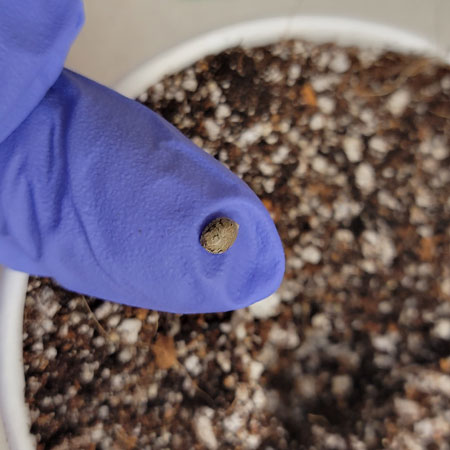
Keep seeds warm during germination. Turn on your grow light (most home gardeners use LED grow lights) and keep it twice as far away as the normal recommendation. That keeps seeds warm, speeding up germination and improving success. Once the seedling pops up, that extra distance prevents fragile young plants from getting too much light.
The result? Healthy sprouts in just a few days. If you don’t see a seedling after a week, start over with a new seed.
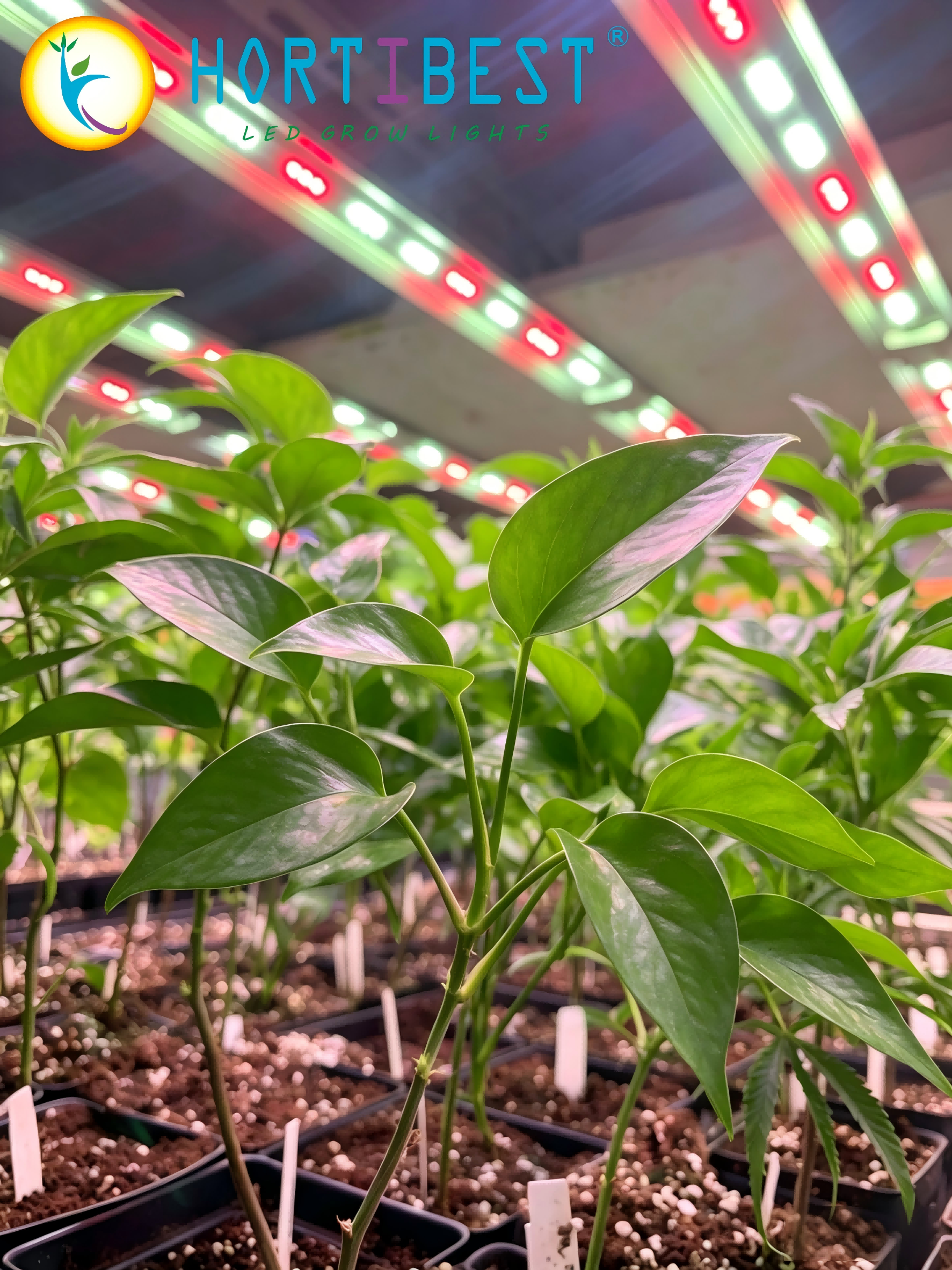
“Day 1” of the schedule is when your seedling looks like this – leaves open and upright.
If seedlings grow tall with a long, thin stem, they’re “reaching” for light. Move your LED a little closer each day until the stretching stops.
Then just follow the proven seedling watering schedule – you’re all set.
 Far-Red Lighting Fixes Low-Light Fruit Drop for Bell Pepper Greenhouses
 Best Commercial Crops to Grow in US Greenhouses This July
 Why Full Spectrum LEDs with Green, Far-Red & UV Deliver Richer Terpenes, Vivid Anthocyanins & Bigger Harvests
 The Commercial Grower's Dilemma: How to 2x Yield Without Sacrificing Quality


