LED grow lights are specially designed to provide a conditioned spectrum for indoor plants to grow and grow in any given year. Proper indoor plants or seedlings will grow healthy, thrive, and potentially reap good returns under LED grow lights.
What are LED grow lights?
Different plants have different light life cycles and growth stages. LED plant grow lights can provide a variety of spectra, luminous power and the color temperature can be controlled, which is ideal for most different plants and adapt to different plants. In addition to indoor plants that need full sunlight, LED grow lights can also be used for gardening, indoor gardening and food production, including indoor hydroponics and aquatic plants.
Why LED grow lights are necessary for indoor grow?
In order to improve the growing conditions in winter or in other environment conditions, more and more growers are now turning to indoor grow. However, due to the need for sunlight, indoor cultivation is not an easy task. If you are going to grow indoors, you'll need complete lights for indoor plant growth. LED grow lights enable growers to grow any indoor plants in any time of the year and in any place.
Should the grow lights be on for 24 hours?
When using grow lights, some growers may ask, if I use grow lights for 24 hours, will indoor plants grow faster and stronger? Absolutely not!
It is not feasible to keep the light on 24/7, because the dark environment is also very important for plant growth. Just like we need to rest at night to rejuvenate our brains and organs, these plants also need to "rest" in the dark to transfer nutrients to their parts without allowing them to overgrow.
Plants need a light-dark cycle to develop properly, and the amount of light they need varies from species to species. With this in mind, it's just a matter of figuring out the right amount of light each day for the plants we're growing. We can check seed packages or plant labels, or ask at the nursery about the specific sunlight needs of hydroponic plants to grow and bloom.
Where grow lights should be placed?
Careful placement of grow lights is also important for them to better simulate ideal sunlight conditions, and there is no doubt that hanging or placing lights above plant beds or pots is a relatively good location so that when the grow lights mimic the natural light overhead sunlight will expose all sides and leaves of the plant to artificial light. But it should be noted that we should adjust the position of the grow lights according to the plants to be planted and the type of grow lights obtained to keep a proper distance. Taking fluorescent lamps and LED plant lights as examples, they dissipate less heat, so it is generally recommended to hang them at a height of 50-100cm from the plant canopy.
 EU PPWR Packaging Regulation Takes Effect Aug 12 | How Hortibest LED Grow Lights Fully Comply
 HPS to Tunable LED Grow Lights: Why Your Old Irrigation Schedule Will Cost You Yields
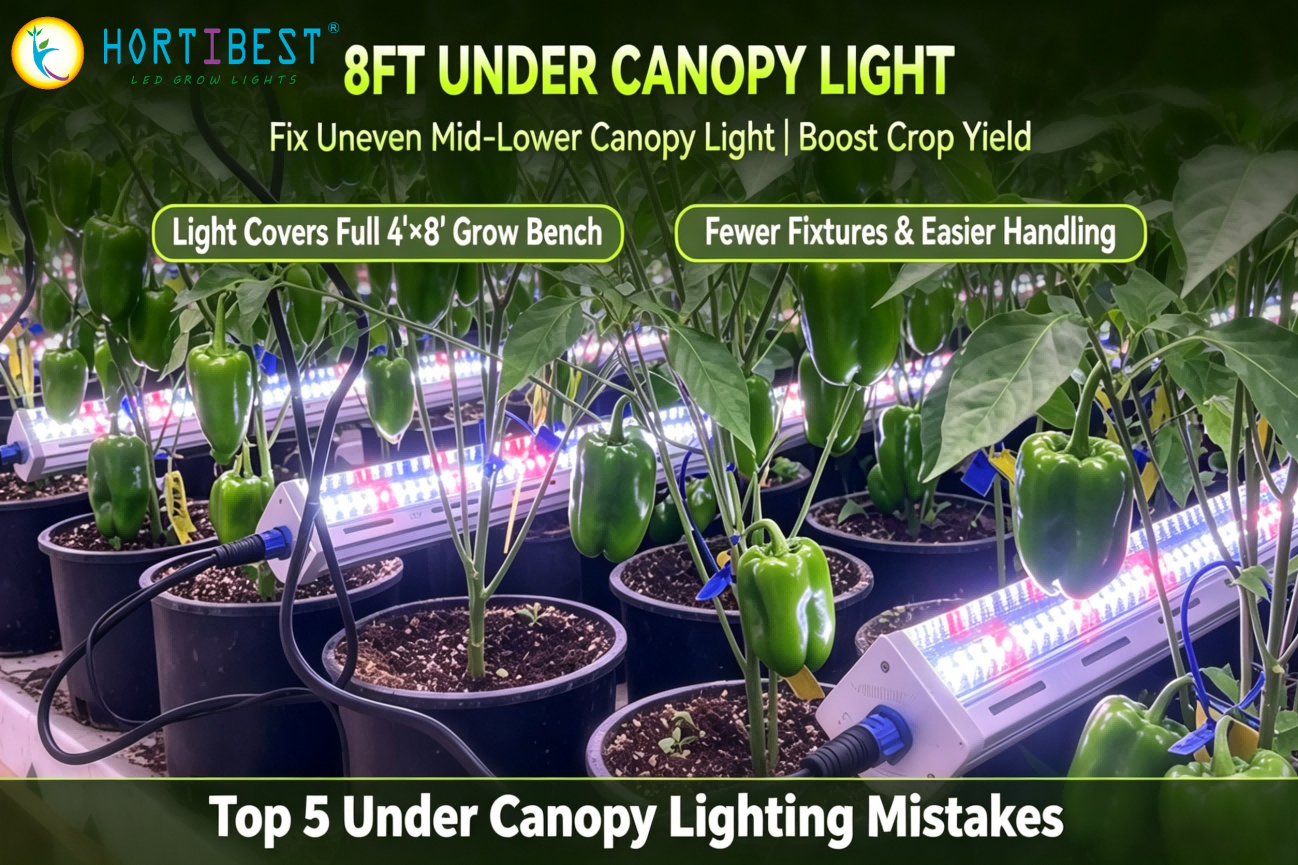 Top 5 Under Canopy Lighting Mistakes Commercial Growers Make | UCL Best Practices
 40% Higher Winter Strawberry Revenue: Minnesota Commercial Greenhouse Fixes High HVAC Costs & Pale Berries with Shark‑2600 Linear LED Grow Lights


