Q: What is the importance of light spectrum for plant growth?
A: Light spectrum plays a crucial role in plant growth as different wavelengths of light have varying effects on plant processes. Blue light (400-500nm) promotes vegetative growth, while red light (600-700nm) stimulates flowering and fruiting. Full spectrum lighting, which includes a wide range of wavelengths, provides a balanced light source that supports overall plant development.
Q: What are the lighting requirements for plants?
A: Plants require a suitable intensity and duration of light for optimal growth. The intensity is measured by Photosynthetic Photon Flux Density (PPFD) and varies depending on the plant species and growth stage. Leafy greens and herbs typically require moderate to high light levels (200-600 µmol/s/m²), while flowering plants and fruiting crops need higher levels (600-1000 µmol/s/m² or more).
Q: How long should I leave the lights on for my plants?
A: The duration of light exposure depends on the specific plant species and growth stage. In general, most plants require 12-16 hours of light per day during the vegetative stage, while the flowering stage often benefits from 10-12 hours of light coupled with a period of darkness. It is important to mimic natural daylight cycles to ensure proper plant development.
Q: Can I use regular household bulbs for plant growth?
A: Regular household bulbs may not provide the necessary light spectrum and intensity required for optimal plant growth. Specialized plant growth lights, such as LED grow lights, offer specific spectrums tailored to plant needs and higher energy efficiency. These lights are designed to promote photosynthesis and support healthy plant growth throughout all stages.
Q: How close should I position the lights to my plants?
A: The distance between the light source and plants depends on the light intensity emitted by the fixture and the plant's light requirements. As a general guideline, LED grow lights should be positioned 12-24 inches above the plant canopy during the vegetative stage, and 6-12 inches during the flowering stage. However, it is recommended to refer to the manufacturer's guidelines for the specific light fixture being used.
Q: Can I use grow lights as the sole light source for my indoor garden?
A: Yes, grow lights can serve as the primary light source for indoor gardens. However, it is important to ensure that the light intensity, spectrum, and duration of exposure meet the specific needs of the plants being cultivated. Supplemental natural light or adjusting the light spectrum throughout the growth cycle may be beneficial in some cases.
Q: How do I measure light intensity for my plants?
A: Light intensity can be measured using a device called a quantum PAR meter or a lux meter. These instruments quantify the amount of photosynthetically active radiation (PAR) or illuminance received by the plants. By measuring the light intensity at different points within the growing area, you can ensure uniform light distribution and adjust the light setup accordingly.
Remember, successful plant growth lighting involves understanding the specific needs of your plants and providing them with the right light spectrum, intensity, and duration. With proper lighting, you can create an optimal environment for healthy and thriving plants.
 EU PPWR Packaging Regulation Takes Effect Aug 12 | How Hortibest LED Grow Lights Fully Comply
 HPS to Tunable LED Grow Lights: Why Your Old Irrigation Schedule Will Cost You Yields
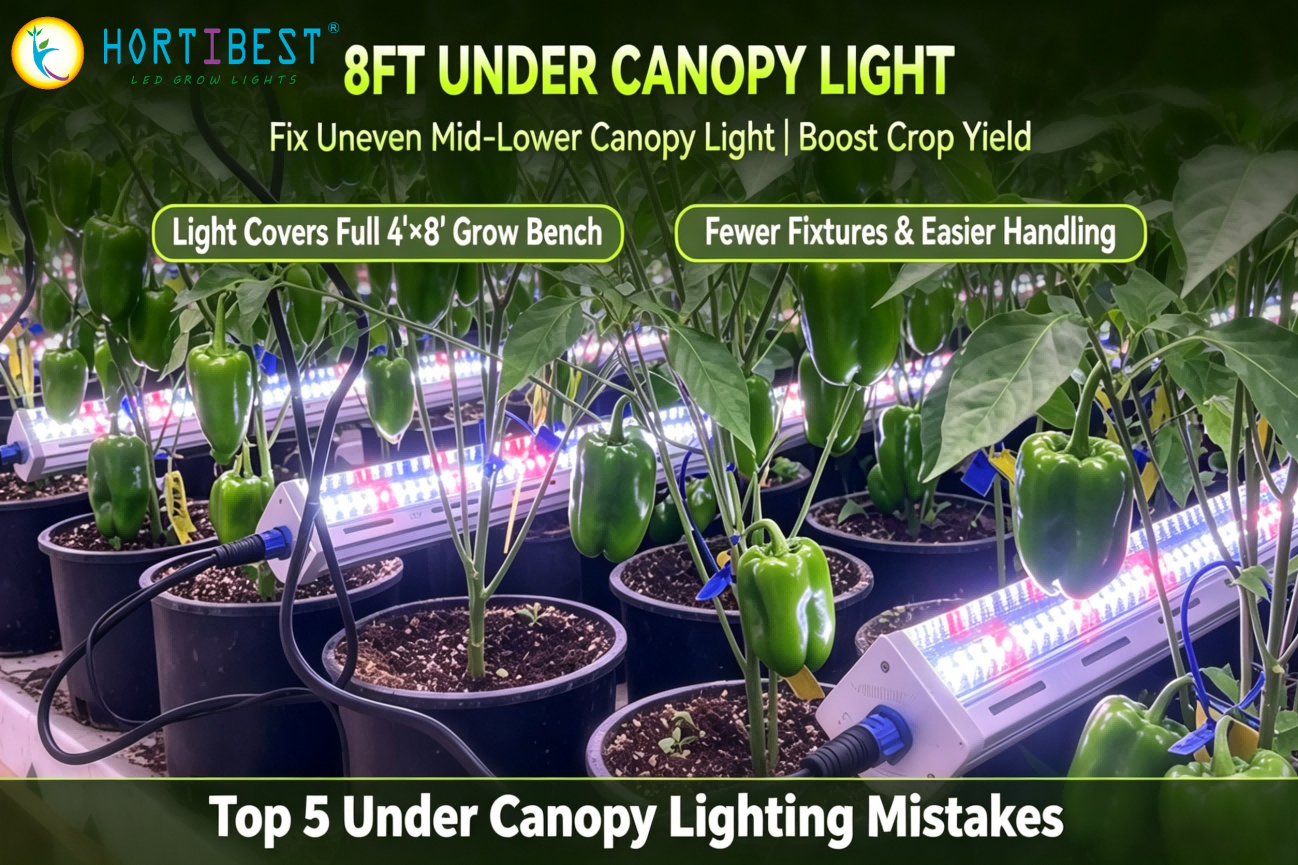 Top 5 Under Canopy Lighting Mistakes Commercial Growers Make | UCL Best Practices
 40% Higher Winter Strawberry Revenue: Minnesota Commercial Greenhouse Fixes High HVAC Costs & Pale Berries with Shark‑2600 Linear LED Grow Lights


